

Executive Summary
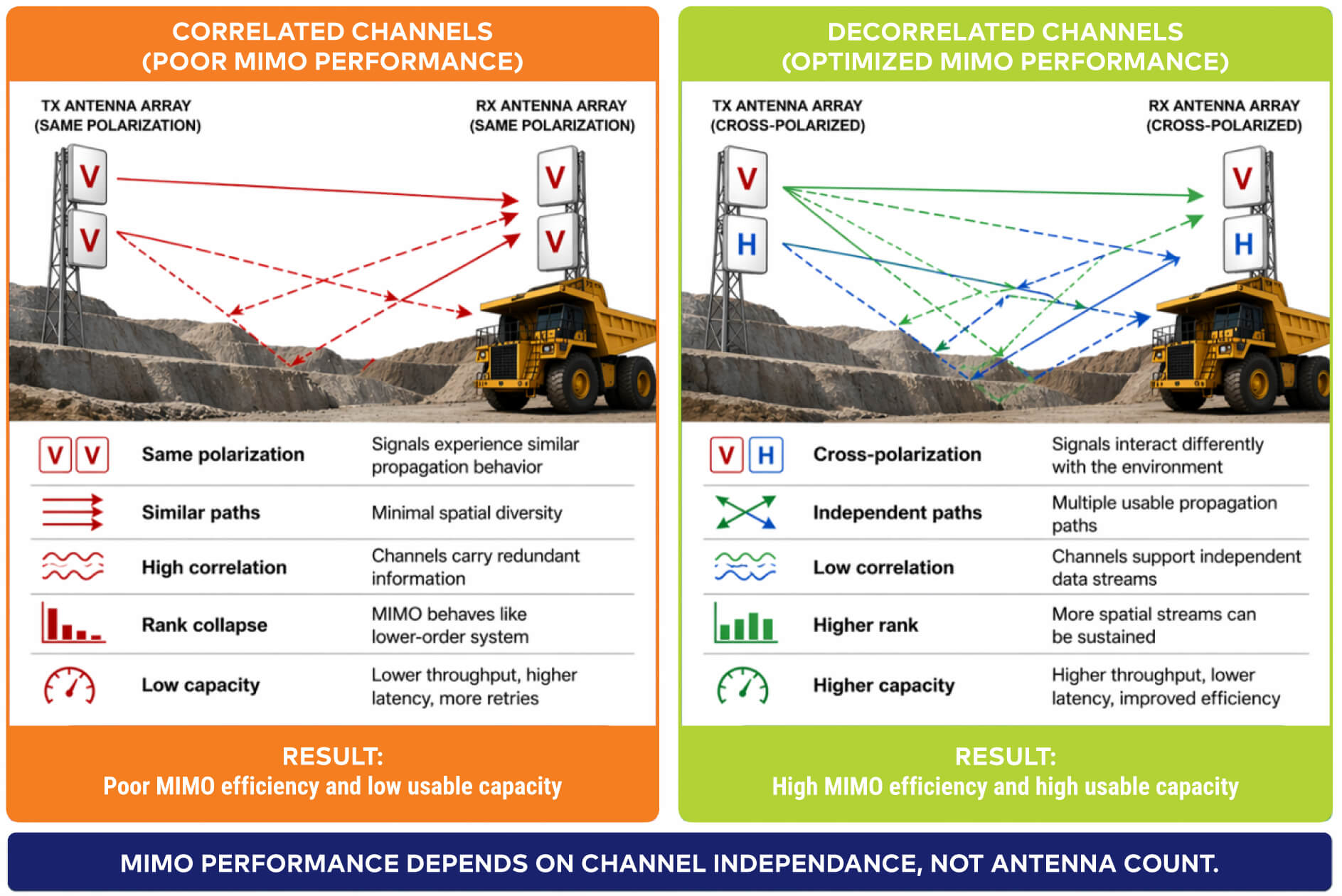
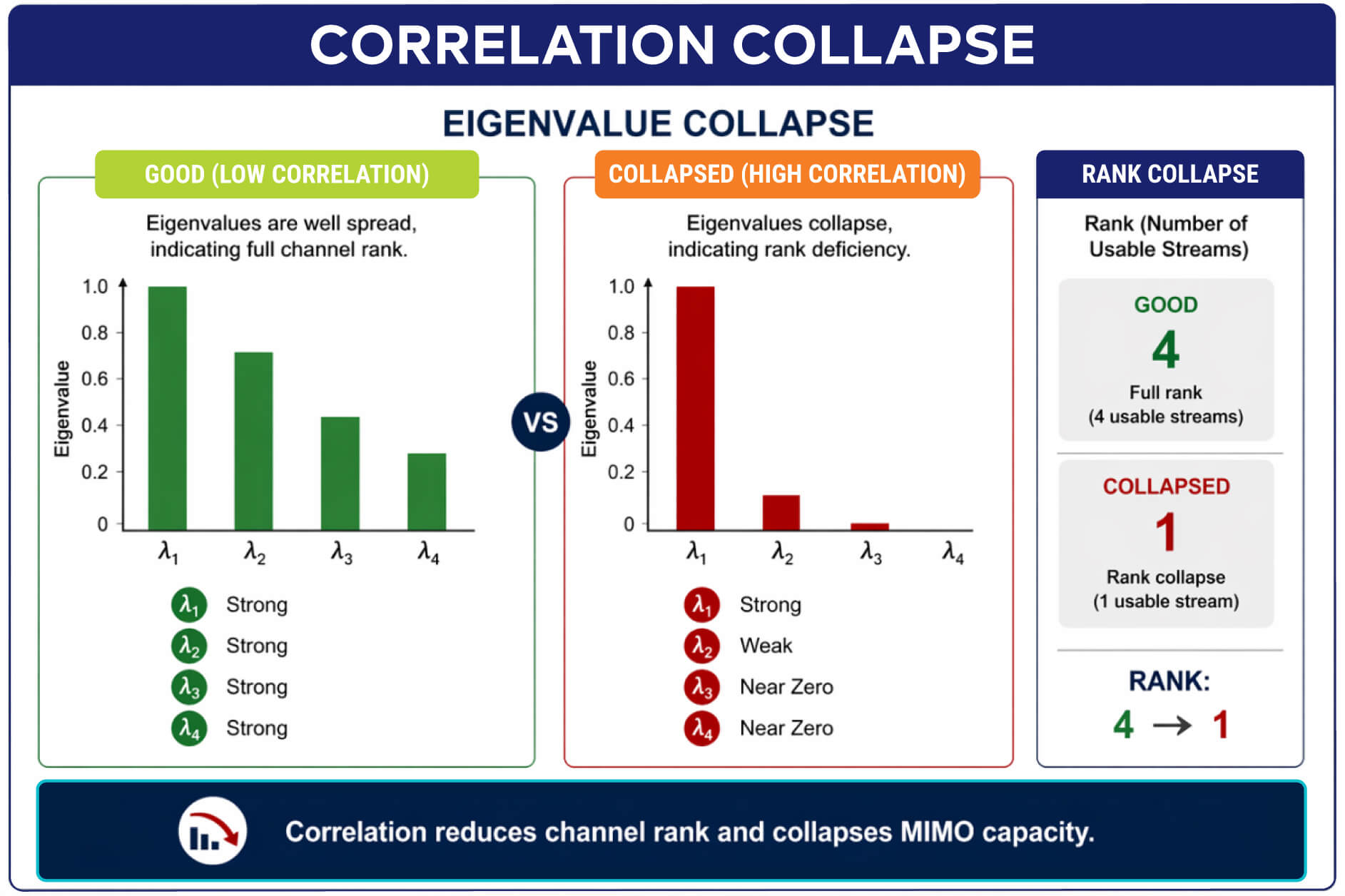
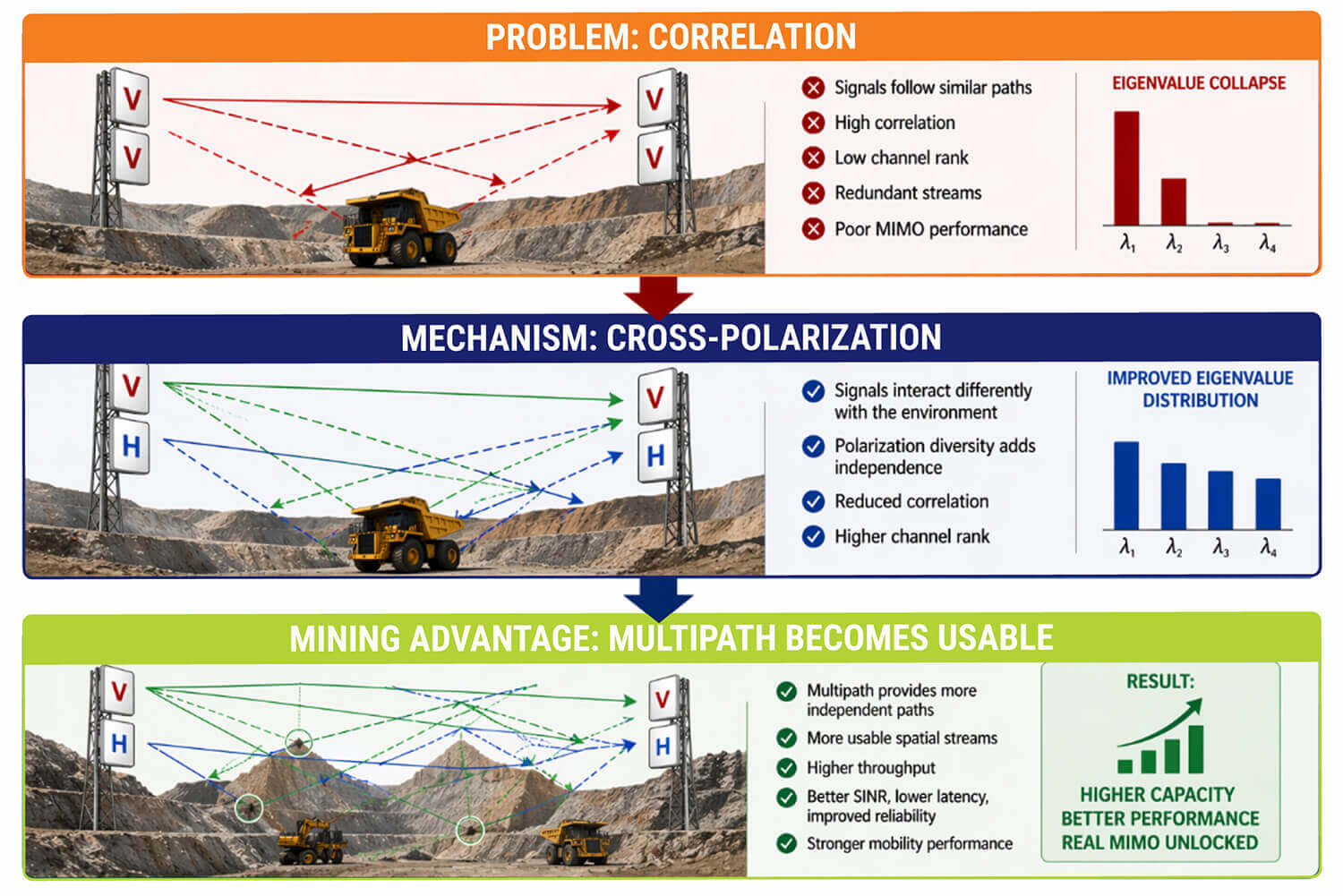
This graphic shows the progression from poor MIMO performance to optimized MIMO performance.
Signals follow similar paths and behave too alike, creating:
Introducing V/H cross-polarization reduces correlation by creating polarization diversity.
Signals now:
In mining’s reflective, multipath environment, those decorrelated paths become usable. Multipath is transformed from a problem into an asset.
Result:
Result: Multiple antennas are installed, but few independent data streams are actually available.
Result: The MIMO channel begins supporting true independent spatial streams.
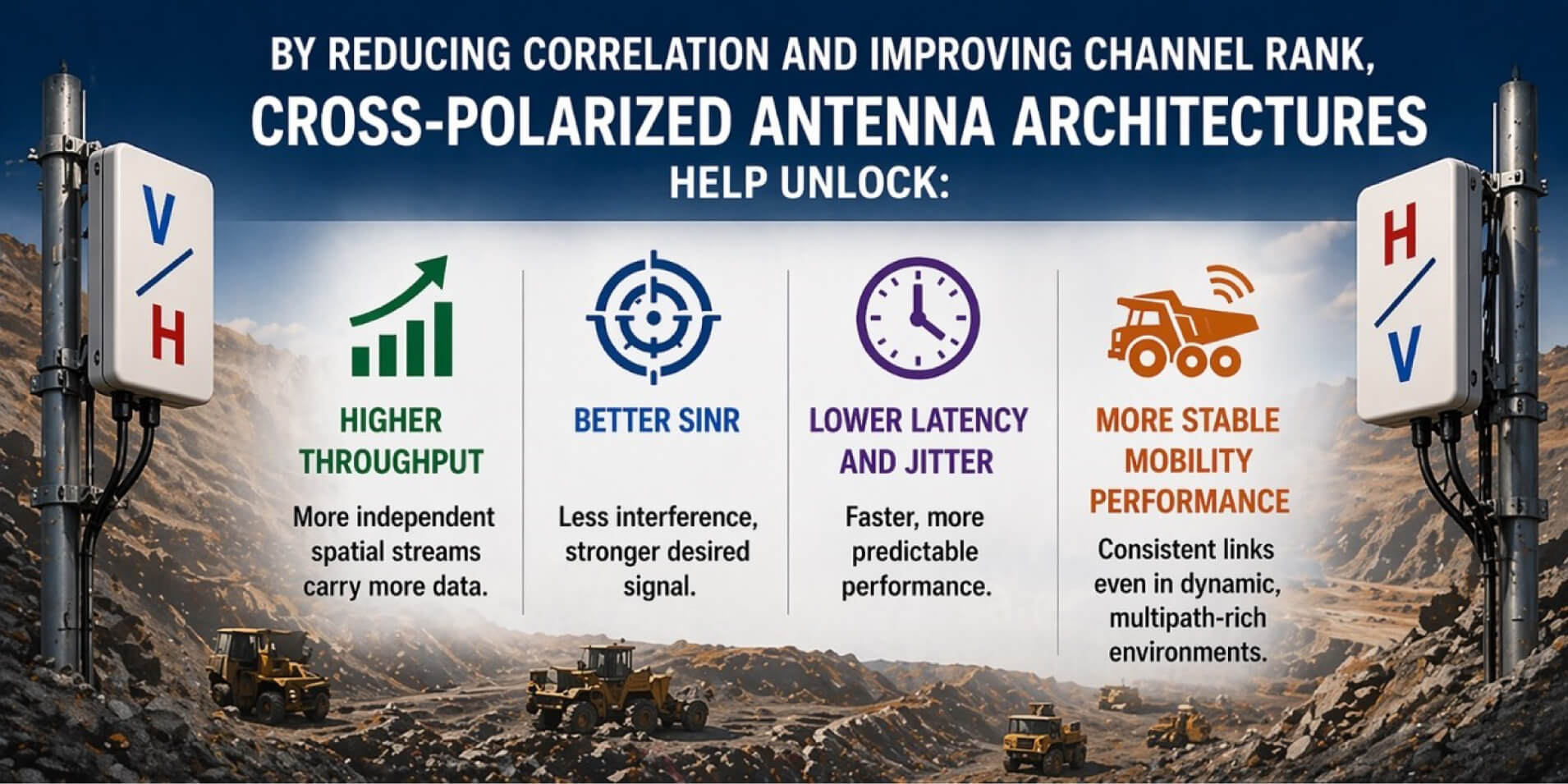
This is how cross-polarization unlocks MIMO performance.
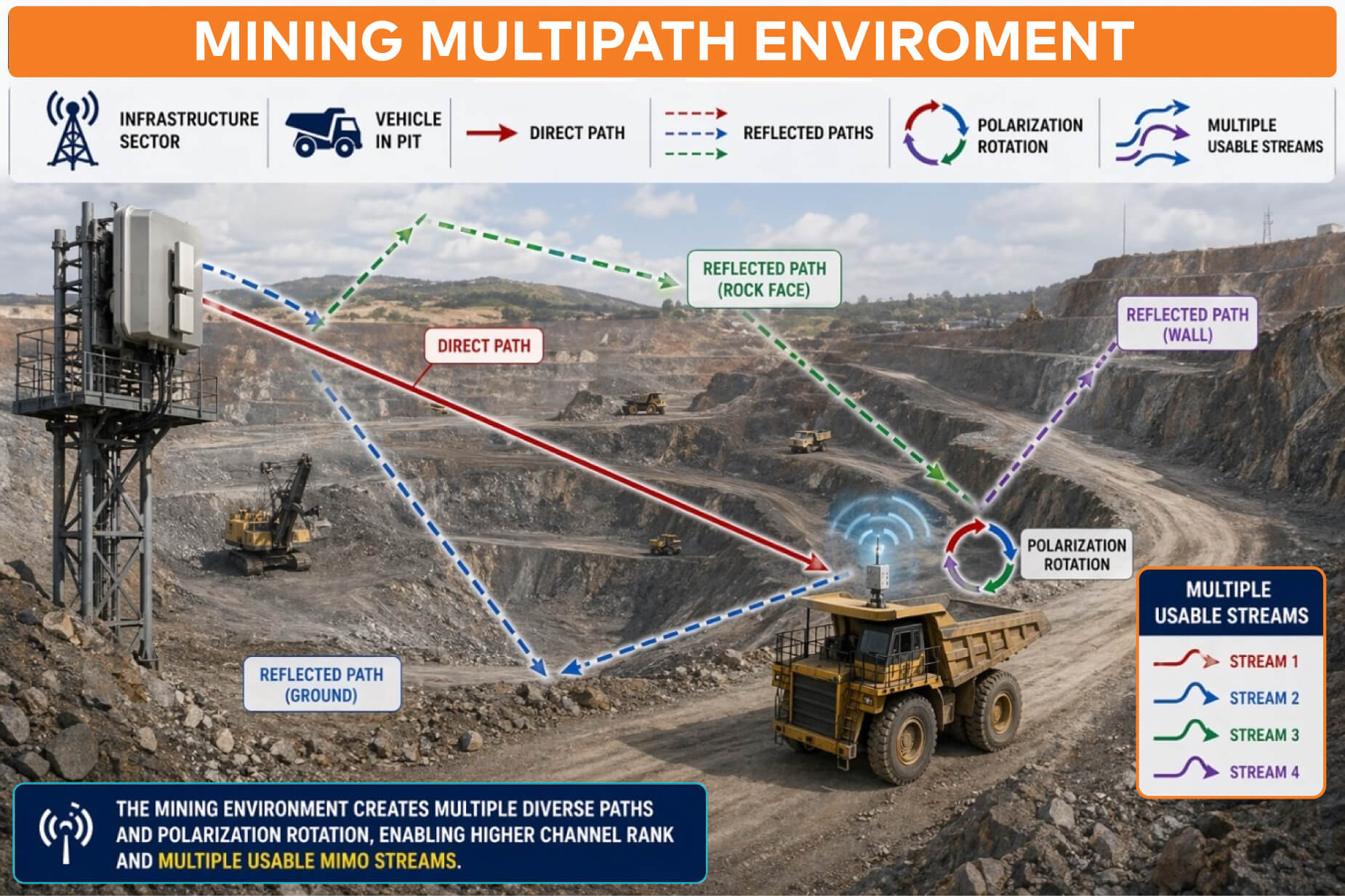
In mining’s reflective, multipath-rich environment, those decorrelated paths become usable.
This graphic shows why mining environments are uniquely suited to MIMO when properly designed.
A signal does not arrive only by a single direct path.
It also arrives via:
These create:
Result: Mining’s complex RF environment can enhance MIMO performance rather than degrade it.
Different protocols may govern how networks operate. The same propagation physics governs how they perform.
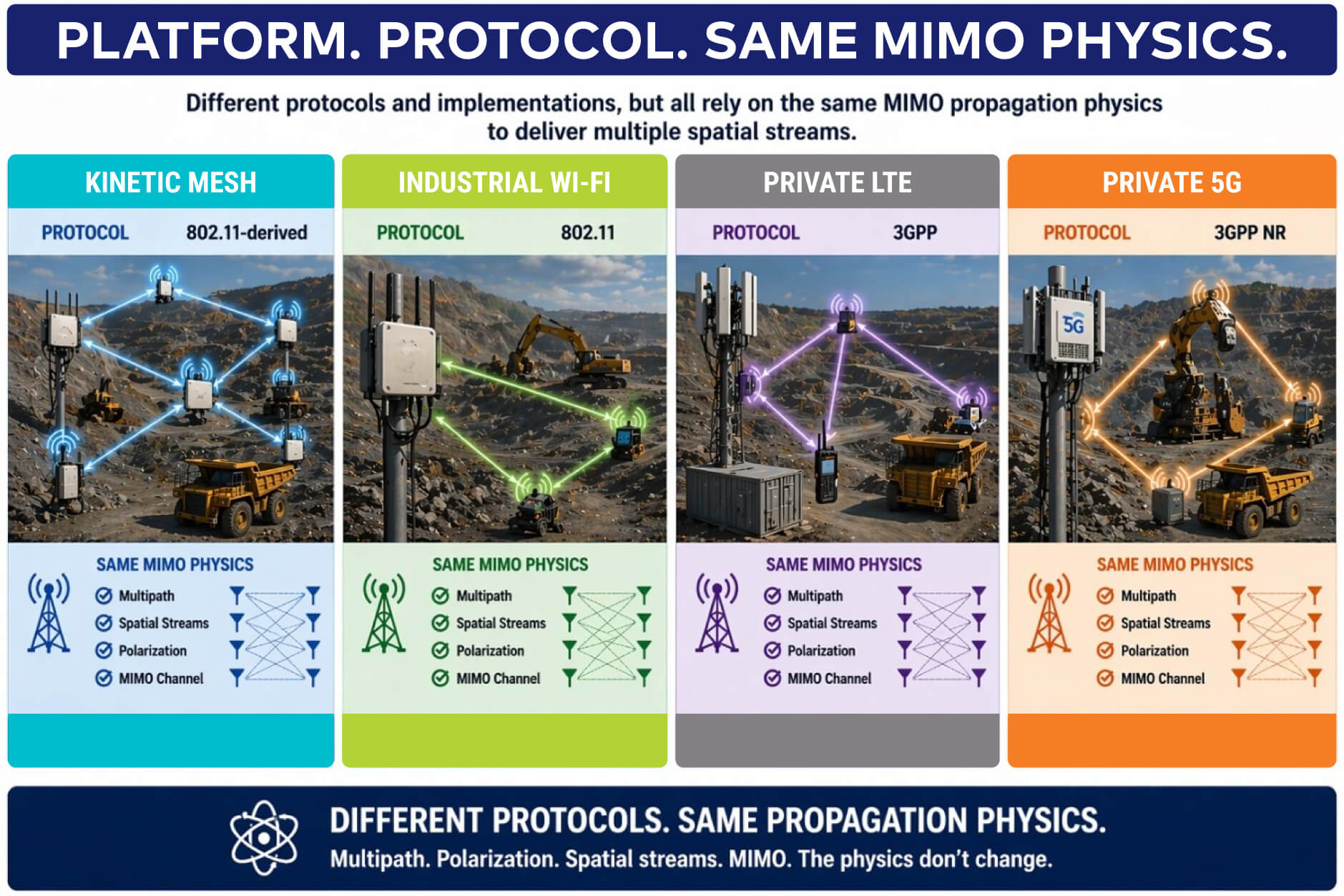
While wireless platforms differ in protocol, architecture and control mechanisms, the underlying propagation physics governing MIMO performance remains the same.
Whether deployed in Kinetic Mesh, Industrial Wi-Fi, Private LTE or Private 5G, performance still depends on the same fundamental mechanisms.
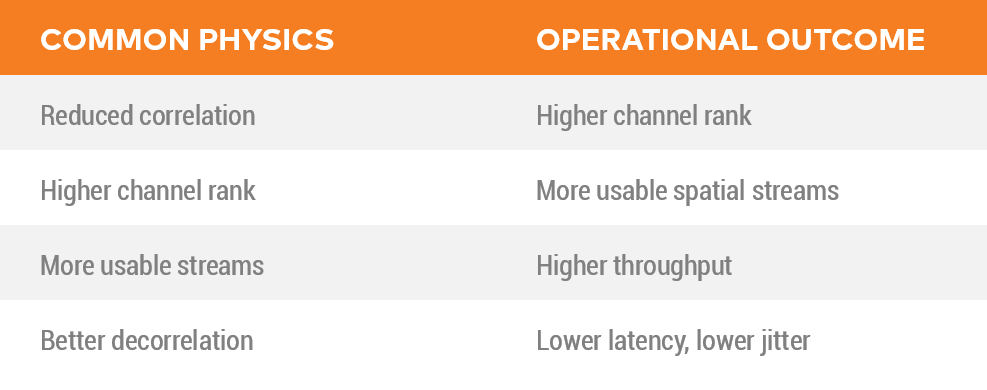
It enhances channel independence across multiple wireless technologies because while protocols differ, the underlying MIMO propagation physics does not.
Pieter Prinsloo,
New Markets and Special Projects Manager,
POYNTING Antennas.