
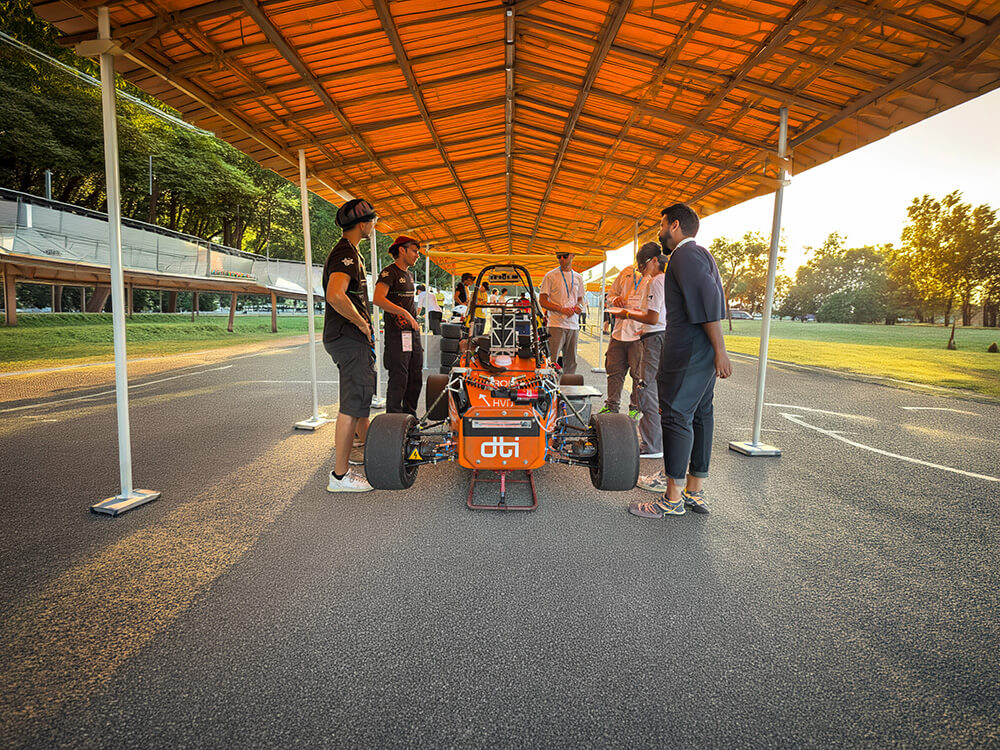
Sapienza Fast Charge is the Formula Student team of Sapienza University of Rome, dedicated to the design, development, and validation of high-performance racing vehicles. Formula Student is an international engineering competition that brings together universities from around the world, providing students with the opportunity to design, build, and race a single-seater race car while putting their technical expertise and teamwork skills into practice. The competition includes several categories, among which are Electric Vehicle (EV) and Driverless Vehicle (DV).
In the Driverless category, the vehicle can complete the track without driver intervention by leveraging the integration of advanced sensors, perception algorithms, localization, path planning, and vehicle control systems. Sapienza Fast Charge is composed of students from a wide range of faculties and academic disciplines who work together to transform the theoretical knowledge gained during their studies into practical engineering solutions. Through the development of innovative technologies for electric and autonomous mobility, the team contributes to the education of future engineers and to the advancement of research in the automotive sector.
Building a race car is one thing. Keeping engineers informed of what is happening inside it, in real time, at speed, across an entire circuit, is another challenge entirely.
The objective of the project was to enable real-time visualization and monitoring of the vehicle's telemetry through ROS 2 and Foxglove Studio, ensuring maximum reliability in both Driverless and Manual Driving configurations. Each operating mode presented distinct networking challenges.
Driverless Configuration: The main challenge was to transmit this high-bandwidth data stream to the pit garage in real time for continuous monitoring of system logs and vehicle status, while isolating telemetry traffic so that it does not interfere with the onboard autonomous computing workload. At the same time, a parallel cellular connection had to be maintained to receive Real-Time Kinematic (RTK) correction data, which is essential for high-precision vehicle localization.
Manual Driving Configuration: The primary objective was to ensure continuous and reliable monitoring of the vehicle's critical parameters regardless of the physical distance between the car and the pit garage. The challenge lay in maintaining a stable communication link throughout the entire track, overcoming coverage gaps and the range limitations of local wireless networks under the high-speed and demanding conditions typical of testing sessions and Formula Student competitions.
Together, these requirements called for a single, compact communication platform capable of handling two fundamentally different connectivity scenarios without compromise.
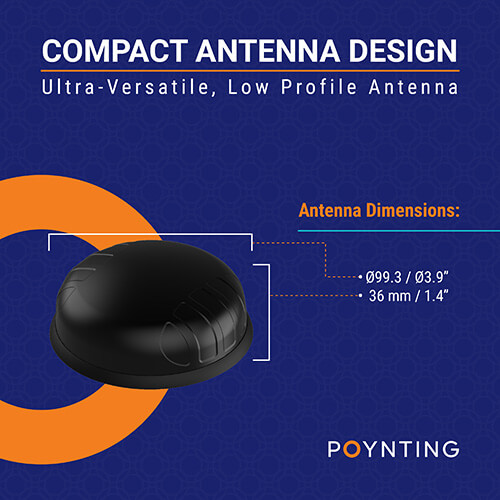
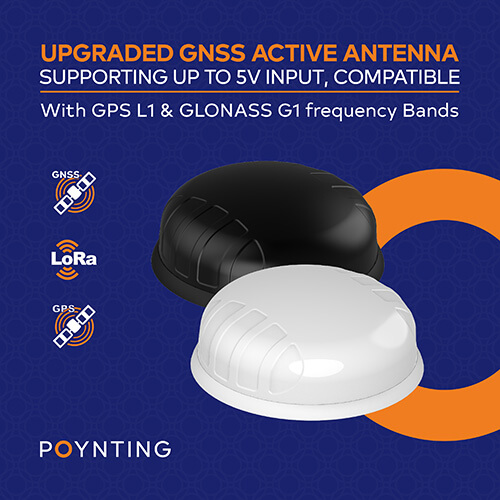
To address both operating scenarios with maximum flexibility, the vehicle's communication architecture was centralized around the Teltonika RUTX11 industrial router, paired with the POYNTING PUCK-5 V2 omnidirectional external antenna. This combination enabled the management of both Wi-Fi communications for the Driverless configuration and LTE connectivity for the Electric Vehicle configuration. The PUCK-5 is a 5-in-1 antenna system within a single enclosure, offering reliable and future-proof connectivity for 5G, LTE, Wi-Fi, and GPS applications, with wideband cellular coverage from 617 to 6000 MHz and dual-band 2x2 MIMO Wi-Fi connectivity supporting 2.4 GHz, 5 GHz, and 6 GHz bands. Its IP69K-rated, vandal-resistant enclosure and compact form factor made it well suited for the demanding mechanical and electrical environment of a Formula Student race car.

Driverless Configuration: The router, together with the POYNTING antenna, established a dedicated wireless local area network (WLAN), providing a direct Wi-Fi connection between the vehicle and the pit garage. While all mission-critical ROS 2 nodes ran locally on the onboard computing platform (NVIDIA Jetson AGX Orin), the router acted as the exclusive gateway for telemetry access. Vehicle telemetry was exposed externally through the Foxglove Studio WebSocket bridge, allowing engineering workstations in the pit garage to connect and receive live data streams without affecting the performance of the autonomous driving software .At the same time, the router's LTE modem maintained an internet connection to download RTK correction data required for centimeter-level GNSS positioning. The dual-SIM functionality ensured uninterrupted connectivity by automatically switching between cellular operators whenever necessary.
Electric Vehicle Configuration: The system relied entirely on LTE cellular connectivity provided through the POYNTING antenna. A custom-designed Auxiliary Control Board (ACB) collected data from the vehicle's sensors and transmitted it through the mobile network to a remote server or middleware platform. Engineers could connect to this server from any location and monitor live telemetry using Foxglove Studio. Communication reliability was ensured by the router's dual-SIM architecture with automatic failover, enabling seamless switching between two mobile network operators in the event of signal loss .
The integration of the POYNTING antenna enabled stable and continuous telemetry transmission, a key requirement for the development and validation of the autonomous driving system. During track testing, an average received signal strength of -63 dBm was maintained, ensuring reliable connectivity even while the vehicle was in motion.The system utilized an average bandwidth of approximately 30 Mbps, providing sufficient capacity for the real-time transmission of telemetry, diagnostic information, and the data required for remote monitoring through Foxglove Studio.
This allowed the engineering team to remotely monitor sensor status, vehicle position, and system diagnostics from the pit garage throughout the testing sessions. As a result, monitoring and debugging activities became significantly more efficient, enabling engineers to quickly identify anomalies and take corrective action without interrupting vehicle testing. The increased reliability of the communication infrastructure also streamlined the collection of data required to optimize the autonomous driving algorithms, making development and validation sessions more efficient, safer, and more productive.
“The stability of the connection provided by the POYNTING antenna was a key factor during the testing of our autonomous Formula Student race car. It enabled reliable real-time telemetry monitoring and significantly improved the efficiency of our development and validation activities.”
Sapienza Fast Charge Team, Sapienza University of Rome
Data Resilience and Continuity The dual-SIM architecture with automatic failover, combined with the performance of the external POYNTING antenna, eliminates communication-related single points of failure caused by signal loss. This ensures uninterrupted real-time telemetry throughout the entire circuit while maintaining a stable RTK correction data stream, which is essential for safe and accurate autonomous vehicle operation.
A Flexible, Unified Hardware Architecture The combination of the Teltonika RUTX11 and POYNTING PUCK-5 V2 demonstrates how a single, compact communication platform can support two fundamentally different networking scenarios: a high-bandwidth local Wi-Fi connection for Driverless operation and long-range LTE connectivity for Manual Driving. This unified approach reduces onboard weight, simplifies wiring, and minimizes system complexity.
Isolation of Onboard Computing Performance By using the router solely as an external data gateway through the Foxglove Bridge WebSocket interface, remote telemetry monitoring remains completely isolated from the execution of mission-critical ROS 2 nodes running on the NVIDIA Jetson AGX Orin. This preserves the deterministic behavior and computational resources required by the autonomous driving software.
Automotive-Grade Reliability Selecting components certified to the ECE R10 (E-Mark) automotive standard validates the team's engineering approach by ensuring compliance with stringent automotive requirements for electromagnetic compatibility, electrical robustness, and vibration resistance under the demanding conditions of Formula Student competitions.
Validated Communication Performance Track testing confirmed the solution's ability to maintain an average received signal strength of -63 dBm while sustaining an average communication bandwidth of approximately 30 Mbps. These results demonstrate that the infrastructure can reliably support real-time telemetry transmission and live monitoring through Foxglove Studio, even during high-speed dynamic vehicle testing.
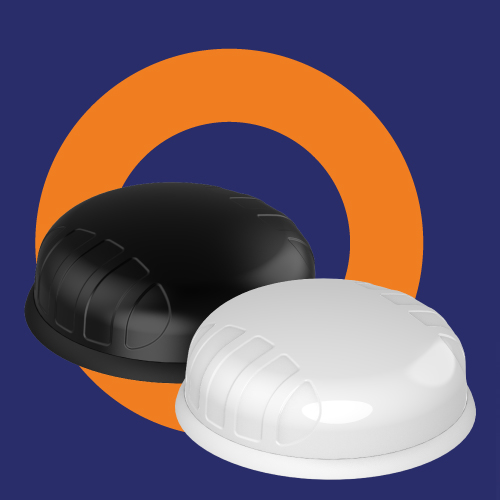

Learn more about the POYNTING PUCK-5 V2: POYNTING.tech/antennas/puck-5
Have Questions? Contact us today.