
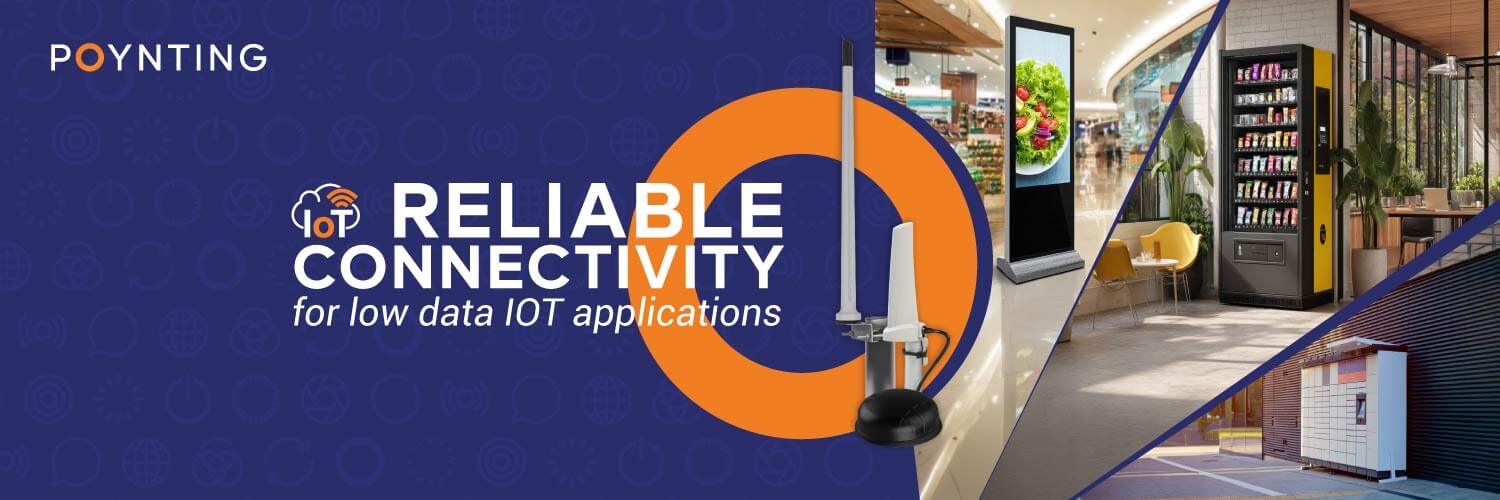
It’s the antenna no one thought about.
Think about the last time your phone lost signal at the worst possible moment. Now imagine that happening to a payment terminal. Or a smart meter. Or a ticketing machine during rush hour. For IoT devices, a dropped connection isn’t just annoying; it’s a failed transaction, a missed reading, or a queue forming where there shouldn’t be one.
Small data packets. Big consequences. And yet the antenna is still often an afterthought.
You don’t need to be technical to get this.
The antenna is what lets a device communicate. It sends and receives the signal. No antenna, no signal. No signal, no data.
And no data? That “smart” device stops being very smart.
It’s a small component. But everything depends on it.
Not seeing it immediately? Let’s explain.
In ideal conditions, most antennas seem fine. Strong signal, clean environment, short test cycles. Everything works.
But IoT doesn’t live in ideal conditions.
IoT devices operate 24/7 in environments that don’t always play along.
This is where the difference shows up.
Doesn’t make sense right away? Keep going.
Because this is exactly where cheaper, generic antennas start to fail quietly.
Generic antennas are built for ideal scenarios. These are built for reality.

SKU: A-PUCK-0001-V2-01
Best for urban and harsh environments
Vending machines, parking meters, ticketing kiosks, they don't need much data, but a reliable connection every time. They send small packets of data, and they need to do it every time, without fail, regardless of where they're bolted down. The PUCK-1 was built specifically for that. It connects reliably where others don't, shrugs off high-pressure cleaning, handles bumps and knocks without complaint, and stays stable through heat, cold, and years of outdoor exposure. And because it covers the full range from 4G to 5G, there's nothing to replace when the network upgrades.

SKU: A-OMNI-0280-V1
Best for remote, outdoor, and extended-range deployments
Some locations just don't have great signal. That's the reality for agricultural sensors, pipeline monitors, and anything deployed far from a city. The
OMNI-280 was made for exactly that; it connects to whatever network is available, whether that's 2G, 3G, or LTE, so it works today and keeps working as infrastructure catches up. It's also built for the kind of conditions that most antennas aren't: extreme heat, extreme cold, direct weather exposure, and environments where a failure means nobody notices until it's too late.
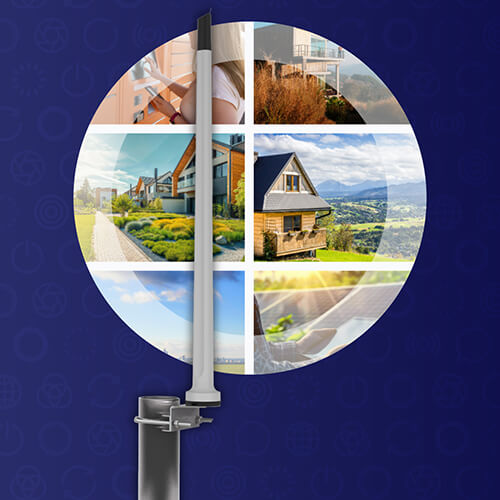
SKU: A-OMNI-0121-V3
Best for high-volume rollouts where programme economics matter
If you're rolling out at scale, the antenna you choose gets multiplied by every unit, every site, every year of the deployment. The OMNI-121 is built with that in mind, consistent quality across every single batch, a form factor that's been installed in millions of devices worldwide, and the kind of reliability that holds up for a decade. Cutting corners on the antenna might save a little upfront. At 100,000 units, it rarely holds anything at all.


Vending machines
Digital signage
Ticketing machines
Parking meters (urban)
Retail kiosks and POS


Remote monitoring (agricultural,
pipeline, environmental)
Rural IoT at the edge of coverage
Outdoor utility metering
Smart city edge nodes
Outdoor security infrastructure


Smart metering rollouts
(urban and suburban)
Power and water infrastructure (M2M)
Distributed IoT sensor networks
Municipal and regional monitoring
Large programmes where
installation speed matters
Once you look at it this way, the decision becomes simpler:
Urban, high-interference environments → PUCK-1

Remote or weak-signal locations → OMNI-280

Large-scale rollouts → OMNI-121

An antenna with negative gain, especially at lower frequencies, is still fully capable of radiating and receiving power effectively. The gain number alone does not determine performance. Overall system design, installation quality, and environmental conditions play a much larger role in real-world results
Whether it’s one device or a hundred thousand, the antenna is the one component you don’t want to revisit later.
Get it right once. That’s the whole POYNT.
Still not convinced? Contact-us