As utilities and critical infrastructure operators continue their digital transformation, reliable and predictable wireless connectivity has become a foundational requirement rather than a nice-to-have. From smart grids and substations to remote pumping stations and pipelines, these environments demand communication networks that are secure, resilient, and available where public cellular networks often fall short.
Band 106 is a 3GPP-standardised cellular band operating in the 900 MHz frequency range, purpose-built to support private LTE (B106) and private 5G (n106) networks. Unlike traditional public mobile bands, Band 106 has been designed specifically for mission-critical, industrial use cases, offering organisations greater control over coverage, performance, and long-term network evolution.
Band 106 (B106 for LTE and n106 for 5G) is a 3GPP-standardized LTE and 5G frequency band operating in the 900 MHz range, introduced specifically to support private cellular networks rather than public consumer mobile services.
Band 106 uses paired spectrum with uplink frequencies from 896–901 MHz and downlink frequencies from 935–940 MHz, operating in Frequency Division Duplex (FDD) mode.
While the available bandwidth is relatively narrow compared to commercial mobile bands, it is well suited to the type of traffic found in utility and industrial networks, control signals, telemetry, automation, voice, and moderate data services, where reliability matters more than peak throughput. Additionally, the value of Band 106 lies in its propagation characteristics.
Low-frequency spectrum around 900 MHz travels farther and penetrates obstacles more effectively than higher-frequency alternatives. This makes Band 106 ideal for wide-area coverage across rural terrain, substations, industrial plants, and other challenging environments where fibre is impractical and public cellular coverage may be inconsistent.

Unlike public mobile bands used by commercial carriers, Band 106 is designed for private, mission-critical networks. These are networks deployed and operated by a single organization, such as a utility or industrial operator, rather than by a mobile network operator serving the general public.
Although Band 106 is being adopted primarily by electric utilities, its relevance extends across multiple sectors. Utilities are using it to support smart grid communications, distribution automation, substation connectivity, and real-time monitoring of assets spread across vast geographic areas. Water and wastewater operators rely on similar capabilities to connect pumping stations and reservoirs, while oil and gas operators use it for pipeline monitoring and remote telemetry.
What these applications have in common is a need for reliable connectivity over long distances, often in electrically noisy or physically harsh environments. In these scenarios, connectivity must remain available even during storms, outages, or public network congestion. The low-frequency 900 MHz spectrum used by Band 106 provides long range, strong penetration through buildings and vegetation, and consistent coverage across wide areas, exactly what these applications demand.
In the United States, much of the 900 MHz paired spectrum used for Band 106 is licensed and managed for private use. This allows utilities and enterprises to deploy their own LTE or 5G networks on exclusive, licensed spectrum, avoiding the uncertainty associated with unlicensed or shared bands.
Compared to shared-spectrum technologies such as CBRS, Band 106 is optimized for coverage and reliability, while CBRS is often used as a complementary layer where higher capacity is required. Many real-world private networks use Band 106 as the wide-area coverage layer and overlay other bands for localized capacity.
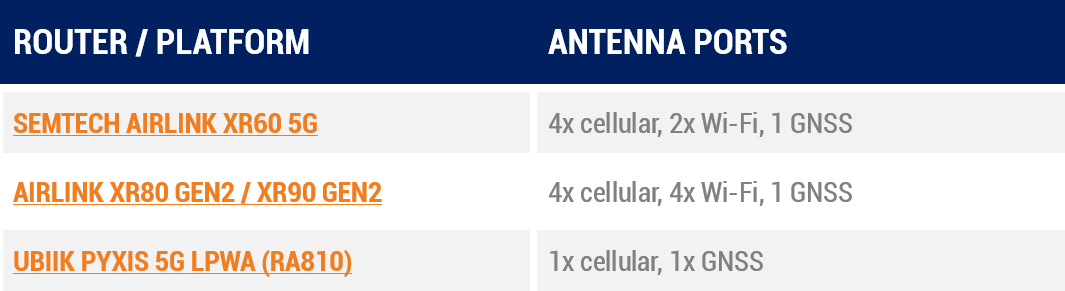
Because Band 106 is a specialised private-network band, it is not supported by consumer-grade cellular routers. . Instead, it is implemented in industrial-grade routers, gateways, and IoT devices specifically designed for private LTE and 5G networks.
These platforms are built for long lifecycles, outdoor installations, and integration into operational technology environments. But regardless of how capable the radio or router is, overall network performance depends heavily on another key component: the antenna.
Band 106’s greatest strength, wide-area coverage, can only be fully realized with the right antenna solutions. Antennas are not just accessories, they are a critical part of wireless communications.
In private LTE and 5G deployments, antennas directly affect:
Well-designed antennas can significantly extend coverage, reduce infrastructure costs, and improve uplink reliability, often the limiting factor in wide-area networks.
In metal-dense or electrically noisy environments, antenna pattern, polarization and installation improve the reception, and modern MIMO techniques enhance throughput and reliability. For mission-critical communications, this performance difference is not academic, it directly affects operational visibility and safety.
POYNTING offers several antenna solutions that are well suited to Band 106 deployments due to their wideband frequency coverage, robust construction, and proven performance in industrial environments.
Directional antennas are ideal for long-range links, remote substations, or locations where focused coverage is required. Their radiation patterns concentrate energy in a specific direction, maximizing range and signal quality over large distances. Some recommended options include:
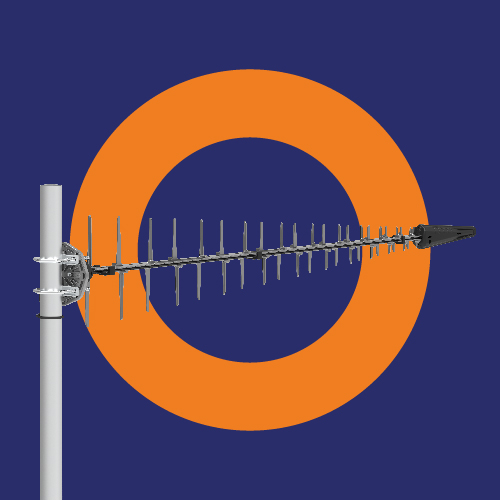
Perfect for very remote locations where a simple point-to-point SISO link is sufficient. Its directional gain allows reliable communication over long distances with minimal infrastructure.
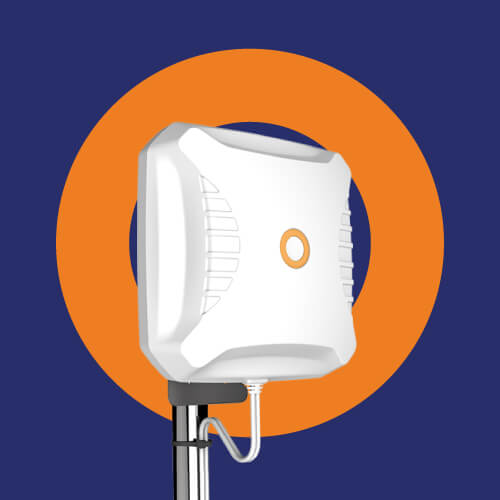
With cross-polarization MIMO capabilities, this antenna is well-suited to environments with metallic structures, heavy machinery, or obstructions, helping to maximize throughput and uplink reliability.
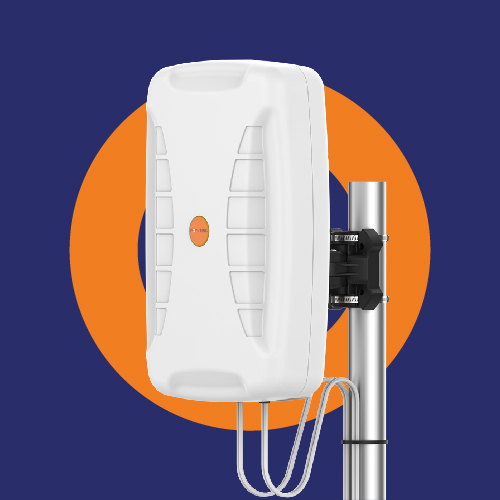
Provides even higher MIMO performance for sites requiring maximum data capacity and reliability in challenging conditions.
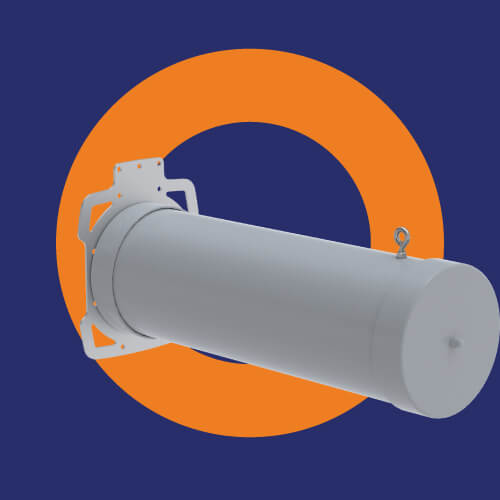
Designed for private 5G deployments in mining, tunneling, and other harsh environments, this antenna uses circular polarization to improve propagation through confined spaces and ensure consistent long-range coverage.
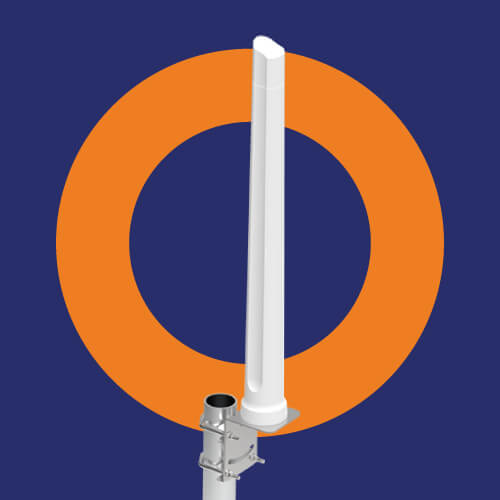
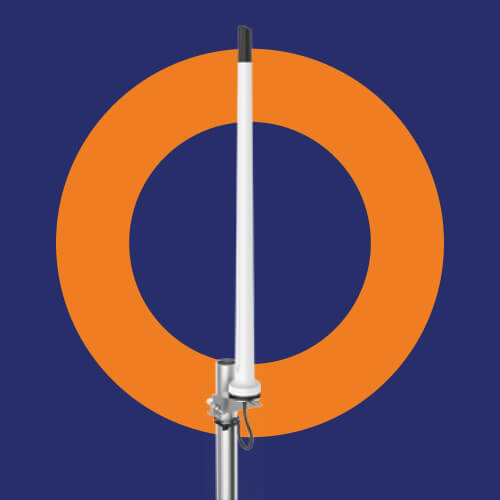
For broader coverage areas, omnidirectional antennas are generally the best choice,
providing uniform coverage around the installation point. Recommended options include:
Ideal for remote sites requiring wide coverage with simple, single-stream connections.

Excellent for challenging industrial environments thanks to cross-polarization MIMO, which enhances signal reliability and throughput.

Specifically designed for mobile applications, with multi-technology support, ensuring consistent connectivity on the go.

Also supports multiple technologies, cellular, Wi-Fi, and GNSS, making it a flexible solution for installations where mobility and multi-service coverage are needed.
By matching the right antenna to the network’s deployment scenario, operators can optimize performance, minimize the number of sites required, and ensure reliable coverage for both LTE and future 5G private networks. In short, while routers and radios form the backbone of a Band 106 network, antennas are the key to delivering consistent, high-quality connectivity across the environment.
Band 106 represents a significant step forward in private wireless communications for utilities and critical infrastructure operators. Its combination of long-range coverage, predictable performance, and future-ready support for 5G makes it a powerful enabler of digital transformation.
As private LTE and 5G networks continue to expand, the role of the antenna becomes increasingly important. Selecting the right antenna is not just about connectivity, it is about unlocking the full value of the spectrum, ensuring network resilience, and delivering reliable communications where they matter most.
At POYNTING, we see antennas as a core part of the network, not an afterthought. In Band 106 deployments, the right antenna choice can be the difference between a network that simply exists and one that truly performs.